For a quick side dish during the week, nothing beats a sweet potato hash. This whole recipe comes together quickly, and can be modified to suit your meal — play with seasonings to match your main dish.
Sweet Potato Latkes
When life — or the season — gives you sweet potatoes, the creativity comes out. It turns out, these great veggies are pretty much in season all year round in Southern California. What I used to think of as a holiday food, served over-sweet and mushy, is now an everyday part of my cooking repertoire.
Thus, yes, allowing me to prove I can serve meals that don’t feature ordinary rice or variations on regular potatoes. Add the obligatory comments about the healthiness and lower calorie count of sweet potatoes here (and those claims are, of course true).
Since I’m not Jewish, latkes are just another way to make potatoes interesting. And since I usually have more sweet potatoes than regular potatoes on hand, well, the connection was obvious. When I searched for basic recipes, I was pleasantly surprised to find a recipe by my friend Sarah topping the search results (see the link in the Notes section). Her recipe was the basis for mine.
Needless to say, I make enough for leftovers during the week. Yummy!
More Roasted Veggies
As noted in my recipe for Roasted Carrots, I roast almost all of my vegetables. They simply taste better that way. There are two keys to roasting vegetables: high heat and evenly sized vegetables.
Oh, and some olive oil, salt, and pepper. Everything else is just a variation on the theme.
Also, don’t crowd your vegetables, and make sure as much of the vegetable as possible is touching the pan. It’s that contact with the heat that matters. Here are a few more tips on roasting vegetables.
If I’m using my oven to roast veggies, I cook in the upper third of my oven and turn once or twice during the cooking process. If I’m using the grill, I keep an eye on the vegetables to ensure even browning (versus, you know, burning). You want to achieve a nice level of caramelization — a deep golden brown shade.
How to Roast
- Preheat your oven or grill to 425 degrees.
- Make sure your vegetables are about the same size.
- Toss with olive oil (a few tablespoons usually does the trick)
- Add salt and pepper to taste. Other herbs and spices can be used as well.
- Cook for approximately 30 minutes, or until you have a good number of caramelized spots. Turn once or twice during the cooking process if necessary. Different veggies cook at different times, so pay attention!
- Eat!
So what can you roast? Read on, my friends, read on. This is, obviously, not a complete list…use your imagination.
- Asparagus. Break off the woody ends, otherwise leave whole. If you’re adding to a pasta, you can cut into smaller pieces, then roast. Asparagus cooks pretty fast, so check at the fifteen minute mark.
- Bell peppers. Cut into strips and roast.
- Broccoli. I love roasted broccoli. Cut into 1 − 1 1/2 inch florets. The ends will get very brown, but that’s a good thing. You can also roast the stems.
- Cauliflower. Oh, roasted cauliflower is especially good (and use the leftovers as the basis for a great soup; or just, you know, roast the cauliflower for the soup). Cut into 1 − 1 1/2 inch pieces. Or make roasted cauliflower “steaks”: cut the head of cauliflower into 1/2 inch thick slices, brush olive oil onto both sides, add salt and pepper, and roast, turning once. Yummy!
- Parsnips. Roast like carrots — diagonal chunks or whole (cut in half if the parsnips are especially thick).
- Sweet Potatoes. Cut into 1-inch chunks, and serve as a meal or make part of a great sweet potato salad. You’re welcome.
- Turnips. Cut into 1-inch chunks and discover what you’ve been missing all these years.
- Zucchini. I usually cut my zucchini in half or quarters (lengthwise) and roast away.
Roasted Carrots
As you might guess, I am a huge proponent of roasting vegetables. Maybe it’s because I’m rebelling against my canned-vegetable youth. Or maybe it’s because roasted veggies are just so, so good. Or, more likely, it’s a bit of both.
Roasting brings out deeper flavors from vegetables, and it’s a year-round preparation. Once grilling season starts, substitute the grill for the oven. And note how the change in cooking method impacts the flavor.
No matter how you do it, roasting veggies, including carrots, requires just a few ingredients. You can, of course, play with flavors (I love my carrots with curry spices or just a dusting of cumin).
Roasted Butternut Squash
Some years, the butternut squash never seems to stop coming. Sure, it makes for excellent soups, but even I can only eat so much of the stuff. And since I love roasted veggies, it only makes sense that a roasted butternut squash dish is in my repertoire.
I’ve served this as a side at dinner and as an appetizer at parties. I’ve also witnessed my husband snatching cubes of squash from the baking sheet while I’m busy with other tasks. Of course, I’m guilty of the same crime, so I can’t complain.
Roasted Brussels Sprouts
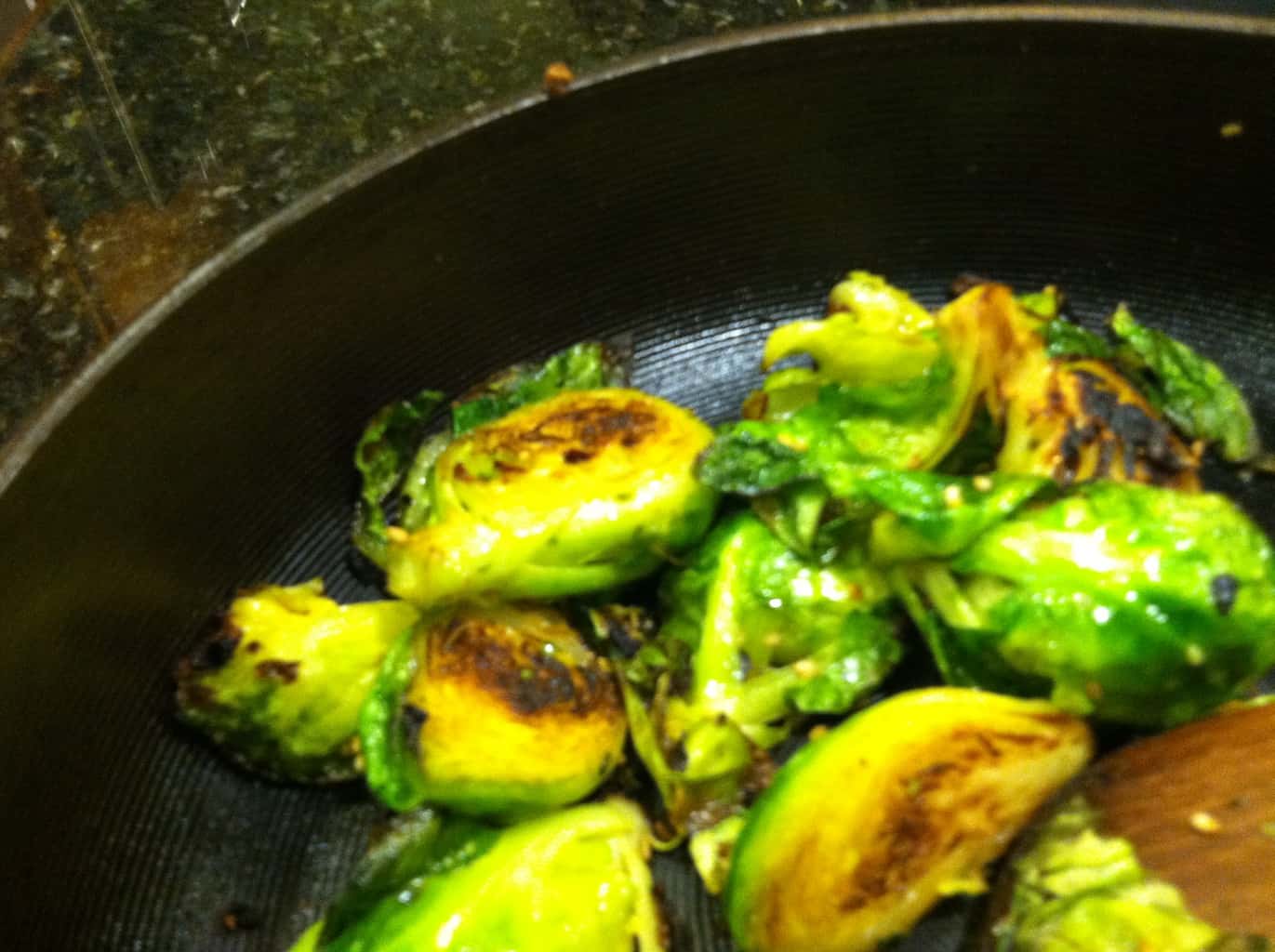
I’m going to guess that you, like me, see the words “Brussels sprouts”, and think “no way”. Chances are your early experiences with this lovely vegetable were of the over-boiled and under-flavored variety. Indifference is the death knell of many a vegetable, and I believe Brussels sprouts have suffered the most.
Despite my bad beginnings with this vegetable, they continued to intrigue me. If everyone hated them, I wondered, how come they were still being sold and consumed in great quantities? Shouldn’t a food that is reviled become, well, extinct? Curious, I began to explore this food.
And I am so glad I did! (And, apparently, so is my husband. I frequently catch him popping them into his mouth like they’re candy.)
Here’s the deal: Brussels sprouts should not be boiled, stewed, or otherwise cooked until mushy. Brussels sprouts must be roasted to bring out their full flavor. They don’t require much in the way of additional seasoning beyond salt and pepper. Serve hot or as part of a roasted vegetable salad.
I’m presenting two cooking options for these fine veggies, oven roasted and pan roasted. Both are equally easy — the method I choose is largely dependent upon what else I’m making that night.
Butternut Squash Curry
Fall in Southern California is more a concept than a season. While my East Coast and Midwest friends talk about cooler temperatures and extol the virtues of casseroles and other cool-weather dishes, I often grill until January.
Still, I am not immune to cravings…and an overabundance of squash. And while I love a good soup, sometimes something more hearty, yet still light, is necessary. This curry — which can be made with any squash, to be honest — is filling, just spicy enough, and perfect for warm or cool evenings.
As a bonus, this recipe is vegan, making it a perfect dish for dinner parties or potlucks.